Seasonal & Festive Thanksgiving Herb Stuffed Turkey
Highlighted under: Festive Bites
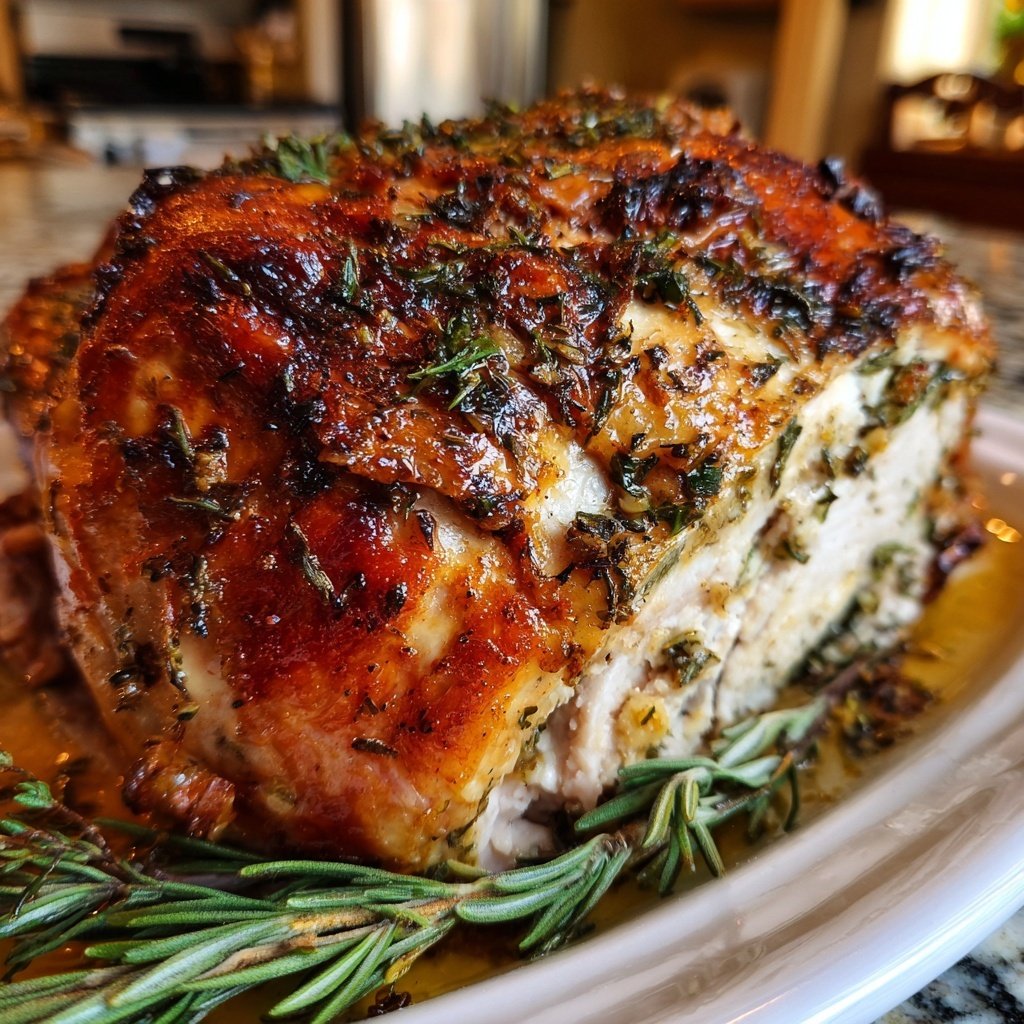
Every Thanksgiving, I look forward to the hearty flavors and the warm aromas that fill my kitchen when making this herb-stuffed turkey. The combination of fresh herbs and savory spices creates a mouthwatering stuffing that pairs perfectly with the tender turkey. I love how the roasting process keeps the meat moist while allowing the skin to crisp up beautifully. This recipe has become a family tradition, and I can't wait to share the joy of making it again this year.
This recipe for herb-stuffed turkey has been a staple in my home, and I remember the first time I made it. The combination of rosemary, sage, and thyme in the stuffing adds a touch of nostalgia as it reminds me of my grandmother's cooking. The key is to allow the turkey to marinate with the stuffing overnight, resulting in enhanced flavor and juiciness.
When roasting, I use a meat thermometer to ensure the turkey reaches the perfect temperature without drying out. I also cover it with foil during the first part of cooking to keep the moisture in. This method not only produces a stunning centerpiece but also brings everyone around the table together for a memorable feast.
Why You Will Love This Recipe
- Aromatic herb stuffing that enhances the turkey's flavor
- Crispy skin enveloping juicy, tender meat
- Perfect centerpiece for holiday gatherings
Understanding the Herbs
Fresh herbs play a crucial role in infusing the turkey with flavor, and this recipe highlights the robust aromas of rosemary, sage, and thyme. Each herb contributes a unique profile: rosemary offers an earthy, pine-like taste, sage adds a warm, peppery note, and thyme provides a subtle sweetness. To maintain vibrancy, always opt for fresh herbs over dried ones; their flavors are potent and fragrant, which is essential for a standout Thanksgiving turkey. If fresh herbs aren't available, you can substitute dried herbs, using about one-third of the quantity required for fresh.
When preparing your herb stuffing, chop the herbs finely to release their essential oils. This allows the flavors to permeate the bread cubes more effectively. A common mistake is using whole leaves, which often result in uneven flavor distribution. Additionally, consider mixing in other herbs or aromatics that you enjoy—thyme can be replaced with dill for a brighter flavor, or even some chopped apples for a hint of sweetness to enhance the savory depth.
Perfecting the Roasting Technique
Roasting your turkey at a steady temperature of 325°F (165°C) ensures an even cooking process while preventing the skin from burning. A general rule of thumb is to roast the turkey for about 13-15 minutes per pound. Regularly check the internal temperature with a meat thermometer, aiming for a reading of 165°F (75°C) at the thickest part of the breast. Remember to probe without touching the bone to get an accurate measure of doneness.
Basting intermittently with the pan juices adds moisture and encourages a beautifully crisp skin; however, over-basting can interfere with browning. If you notice that the skin is becoming too dark before the turkey is fully cooked, loosely cover it with aluminum foil to shield it from direct heat. This helps create a balanced texture between the crispy exterior and the moist meat inside.
Serving and Storing Leftovers
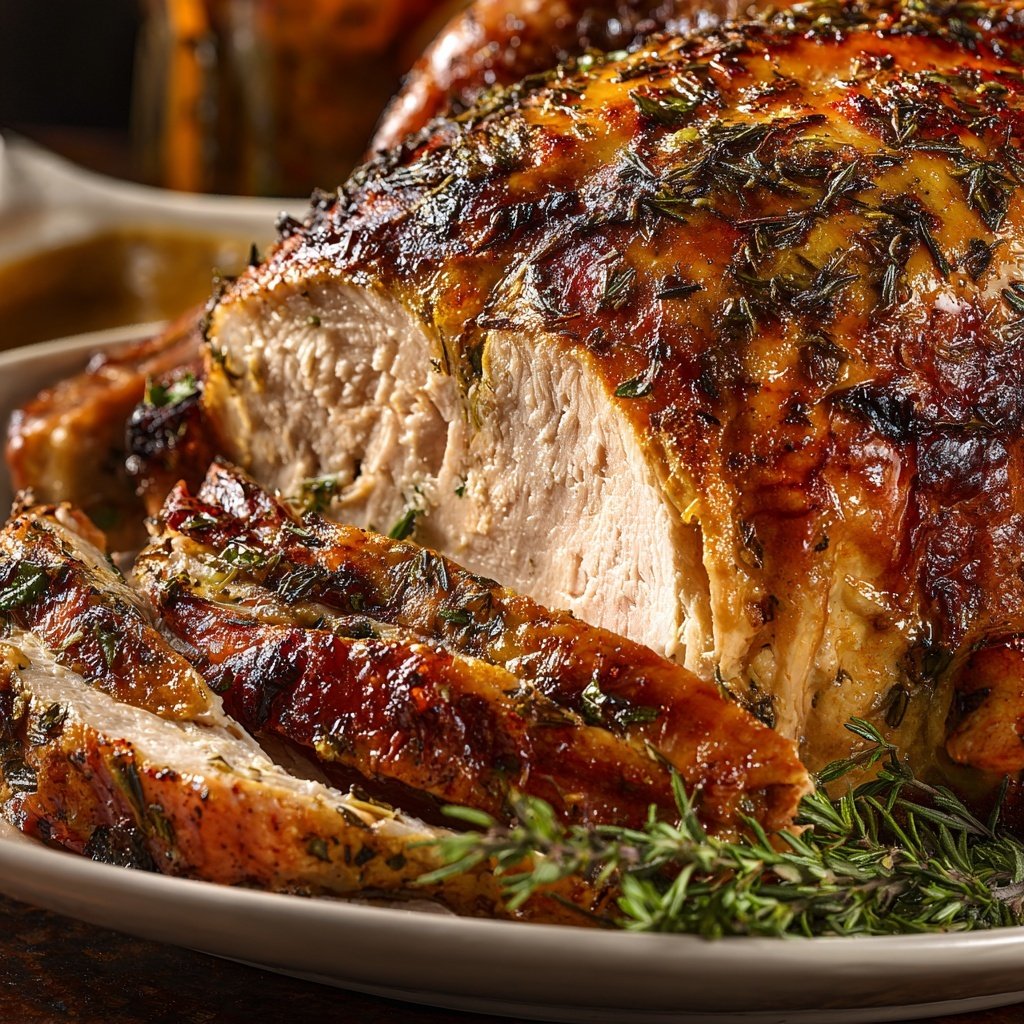
After allowing the turkey to rest for 20 minutes post-roasting, carve using a sharp knife, slicing against the grain of the meat to enhance tenderness. I like to serve this herb-stuffed turkey with classic sides like homemade cranberry sauce and buttery mashed potatoes, allowing the rich flavors of the turkey to shine. Don't hesitate to get creative with sides that can complement the savory stuffing, like roasted Brussels sprouts or a fresh green salad for a nice crunch.
For leftovers, store the turkey pieces in an airtight container in the fridge for up to four days. To keep the meat moist when reheating, add a splash of chicken broth to prevent dryness. If you're planning to freeze leftovers, wrap them tightly in plastic wrap and then foil to avoid freezer burn. Frozen turkey can be safely stored for up to three months. Before serving, ensure thorough reheating to a safe internal temperature of 165°F (75°C).
Ingredients for the Turkey
For the Turkey and Stuffing
- 1 (12-14 lb) whole turkey, thawed
- 2 cups bread cubes, dried
- 1 cup onion, diced
- 1 cup celery, diced
- 1/2 cup butter, melted
- 1/4 cup fresh rosemary, chopped
- 1/4 cup fresh sage, chopped
- 1/4 cup fresh thyme, chopped
- 3 cups chicken broth
- Salt and pepper to taste
Seasoning
Instructions
Prepare the Stuffing
Preheat the oven to 325°F (165°C). In a large skillet, melt the butter over medium heat. Add the onion and celery, cooking until softened. In a large bowl, combine the bread cubes, cooked vegetables, fresh herbs, and enough chicken broth to moisten the mixture. Season with salt and pepper, and stir well.
Prepare the Turkey
Remove the turkey giblets and pat the turkey dry with paper towels. Season the cavity with salt and pepper. Stuff the herb mixture into the cavity, then tie the legs together with kitchen twine.
Roast the Turkey
Place the turkey breast-side up on a roasting rack in a large roasting pan. Roast for approximately 2.5 hours, or until the internal temperature reaches 165°F (75°C). Baste occasionally with pan juices and cover loosely with foil if the turkey becomes too brown.
Rest and Serve
Once cooked, remove the turkey from the oven and let it rest for about 20 minutes before carving. This allows the juices to redistribute. Serve with your favorite sides and enjoy the festive flavors!
Serving Suggestions
Pro Tips
- For added flavor, consider creating a brine for the turkey the day before using salt, sugar, and herbs. This will enhance moisture and taste throughout the meat.
Make-Ahead Options
Preparing the stuffing a day in advance can save you valuable time on Thanksgiving morning. Simply complete the stuffing steps, but do not stuff the turkey early. Store the herb mixture in the refrigerator, allowing the flavors to deepen overnight. On the day of roasting, stuff the turkey just before it goes into the oven to ensure food safety and optimal moisture retention.
In addition, you can also pre-brine the turkey a day or two prior to roasting, which enhances juiciness. Using a saltwater solution, soak the turkey in the fridge; this will help to tenderize the meat and add flavor. Remember to rinse the turkey thoroughly and pat it dry to maintain a crisp skin during roasting.
Variations to Try
While this herb stuffing is a family favorite, don’t be afraid to experiment with flavors! For a southwestern twist, add chorizo and corn to your bread mixture. The spicy sausage brings a hearty flavor that pairs beautifully with the traditional turkey, giving your holiday meal a new dimension.
You can also consider adding different nuts or dried fruits into the stuffing for texture and sweetness. Chopped pecans or walnuts bring a delightful crunch, while diced dried cranberries or apricots introduce a hint of fruity flavor. These additions can create a unique stuffing that reflects your family's taste preferences.
Questions About Recipes
→ How long should I thaw a frozen turkey?
Generally, allow 24 hours of thawing time for every 4-5 pounds of turkey in the refrigerator.
→ What can I use if I don't have fresh herbs?
Dried herbs can be used; just remember to reduce the quantity to about a third since dried herbs are more concentrated.
→ How can I make the skin crispy?
Ensure the skin is completely dry before roasting and baste with butter or olive oil during the cooking process.
→ Can I prepare the stuffing a day ahead?
Yes, you can prepare the stuffing a day in advance. Just store it in the refrigerator until ready to stuff the turkey.
Seasonal & Festive Thanksgiving Herb Stuffed Turkey
Created by: Olivia Barrett
Recipe Type: Festive Bites
Skill Level: Intermediate
Final Quantity: 12 servings
What You'll Need
For the Turkey and Stuffing
- 1 (12-14 lb) whole turkey, thawed
- 2 cups bread cubes, dried
- 1 cup onion, diced
- 1 cup celery, diced
- 1/2 cup butter, melted
- 1/4 cup fresh rosemary, chopped
- 1/4 cup fresh sage, chopped
- 1/4 cup fresh thyme, chopped
- 3 cups chicken broth
- Salt and pepper to taste
How-To Steps
Preheat the oven to 325°F (165°C). In a large skillet, melt the butter over medium heat. Add the onion and celery, cooking until softened. In a large bowl, combine the bread cubes, cooked vegetables, fresh herbs, and enough chicken broth to moisten the mixture. Season with salt and pepper, and stir well.
Remove the turkey giblets and pat the turkey dry with paper towels. Season the cavity with salt and pepper. Stuff the herb mixture into the cavity, then tie the legs together with kitchen twine.
Place the turkey breast-side up on a roasting rack in a large roasting pan. Roast for approximately 2.5 hours, or until the internal temperature reaches 165°F (75°C). Baste occasionally with pan juices and cover loosely with foil if the turkey becomes too brown.
Once cooked, remove the turkey from the oven and let it rest for about 20 minutes before carving. This allows the juices to redistribute. Serve with your favorite sides and enjoy the festive flavors!
Extra Tips
- For added flavor, consider creating a brine for the turkey the day before using salt, sugar, and herbs. This will enhance moisture and taste throughout the meat.
Nutritional Breakdown (Per Serving)
- Calories: 350 kcal
- Total Fat: 20g
- Saturated Fat: 6g
- Cholesterol: 90mg
- Sodium: 680mg
- Total Carbohydrates: 30g
- Dietary Fiber: 2g
- Sugars: 2g
- Protein: 25g